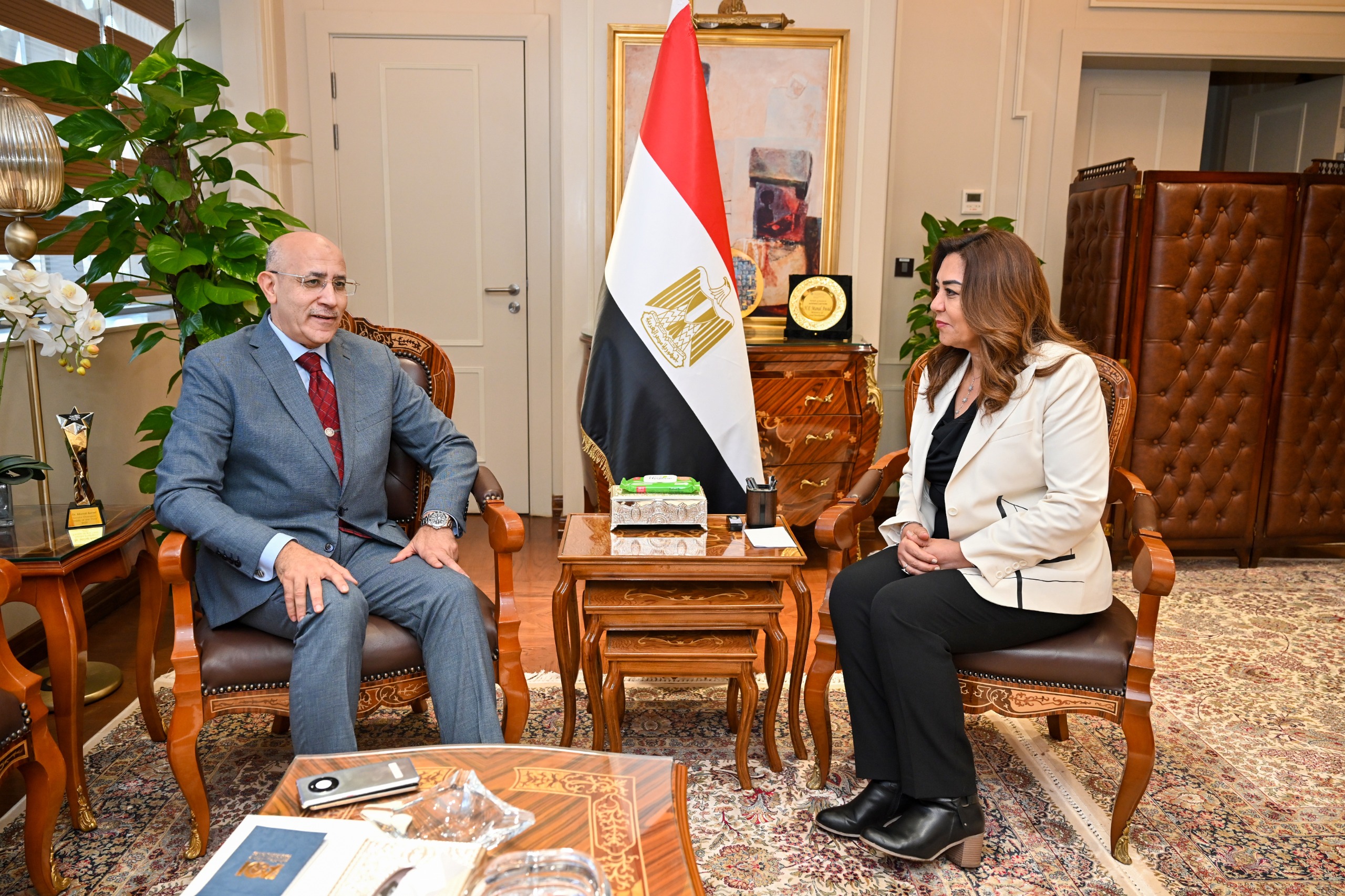
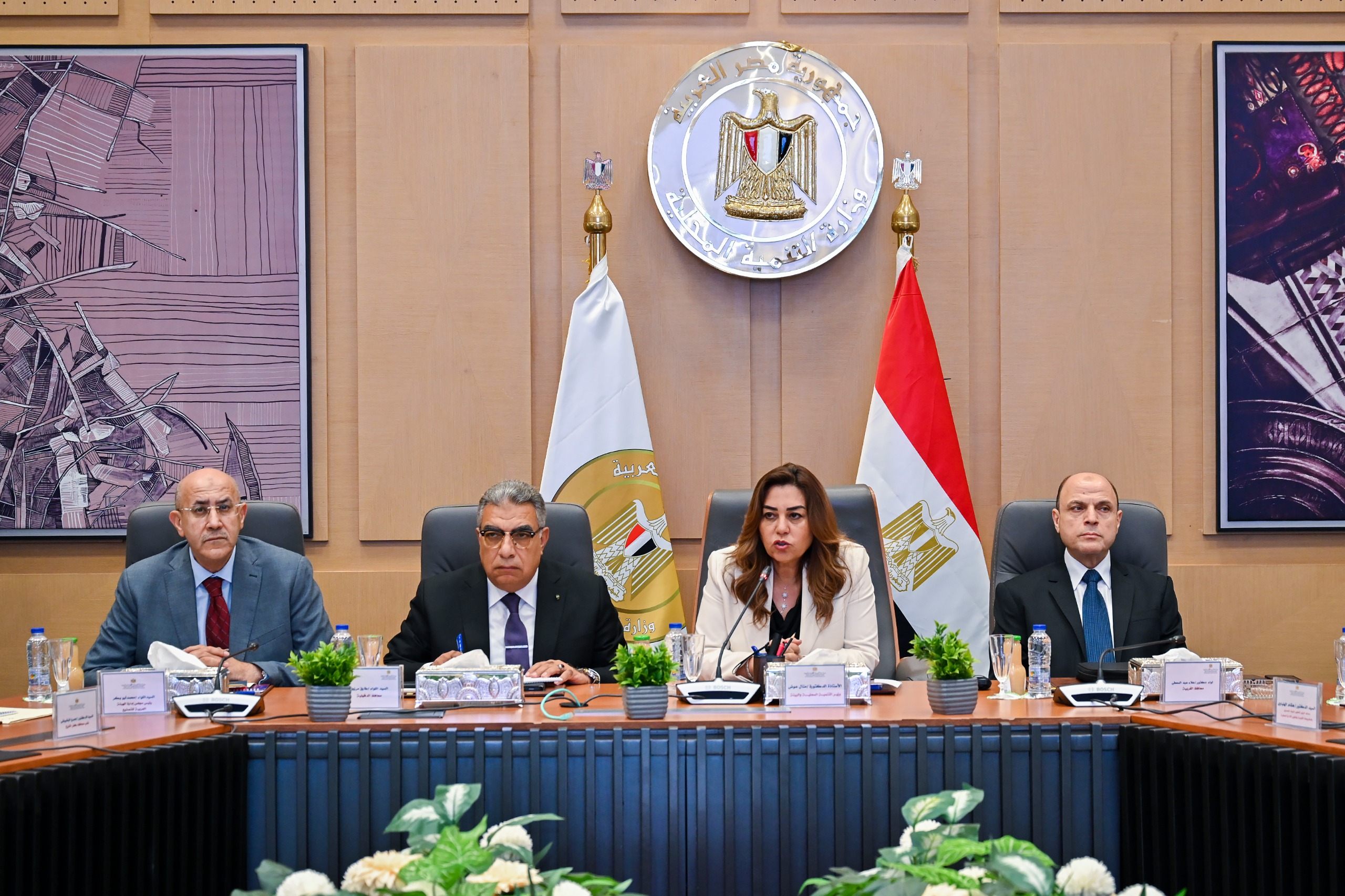
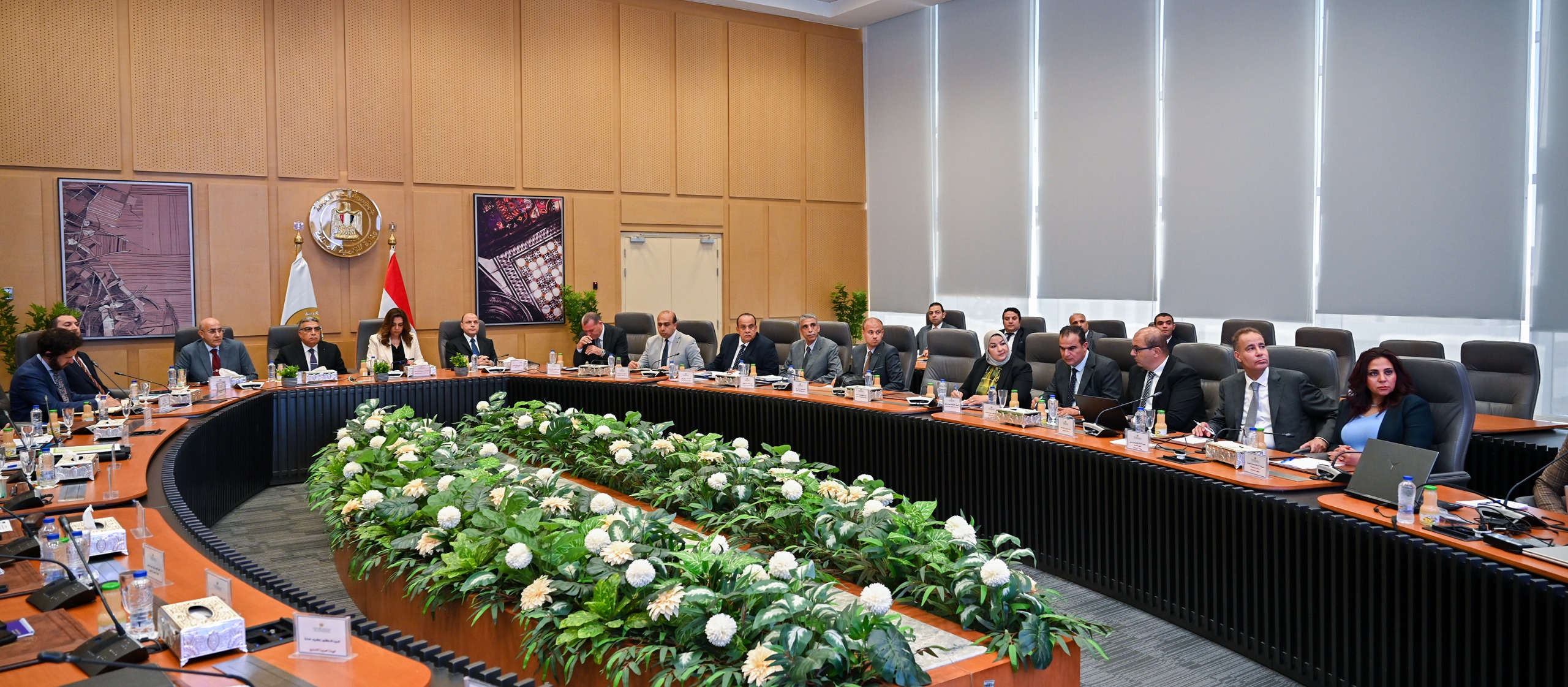
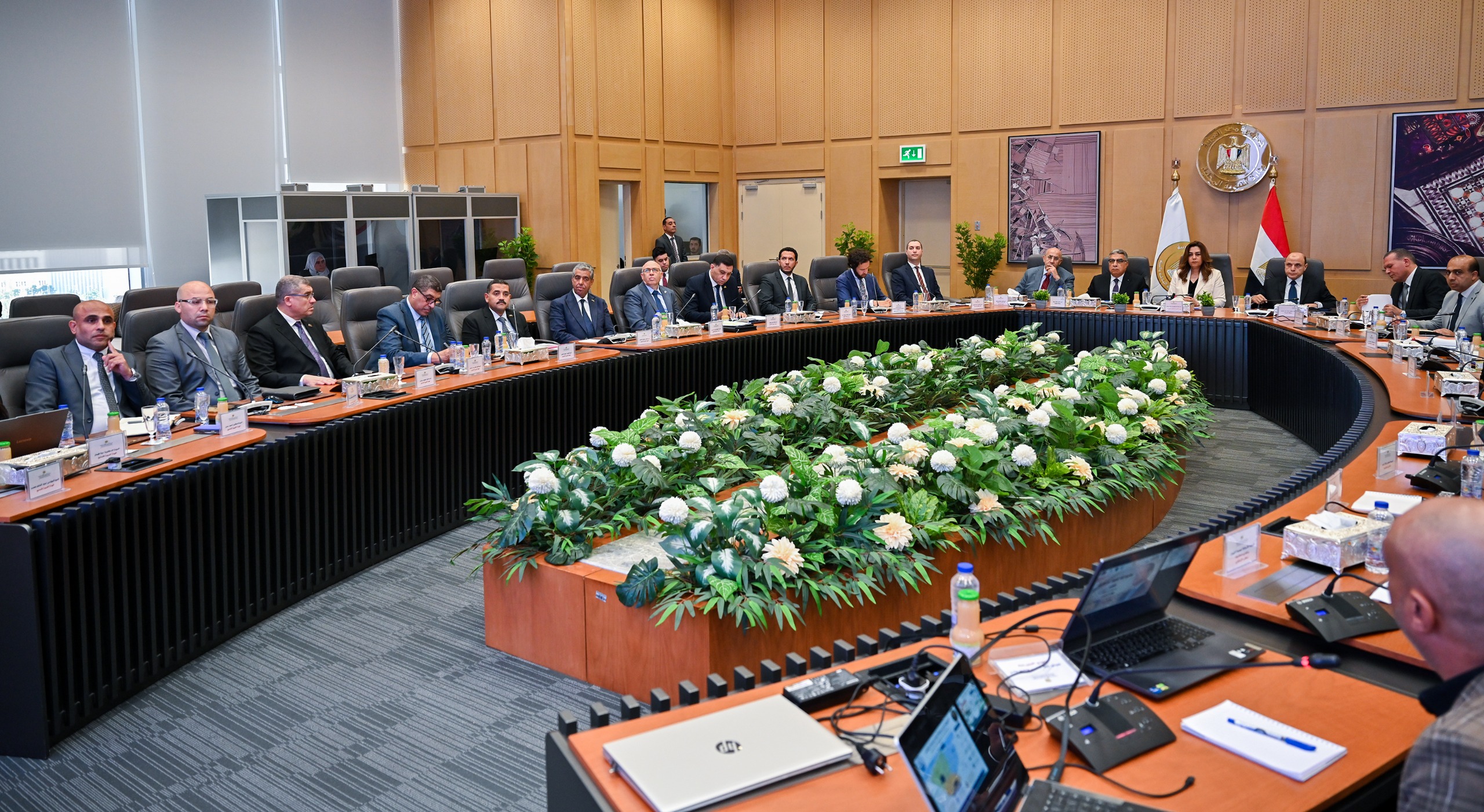
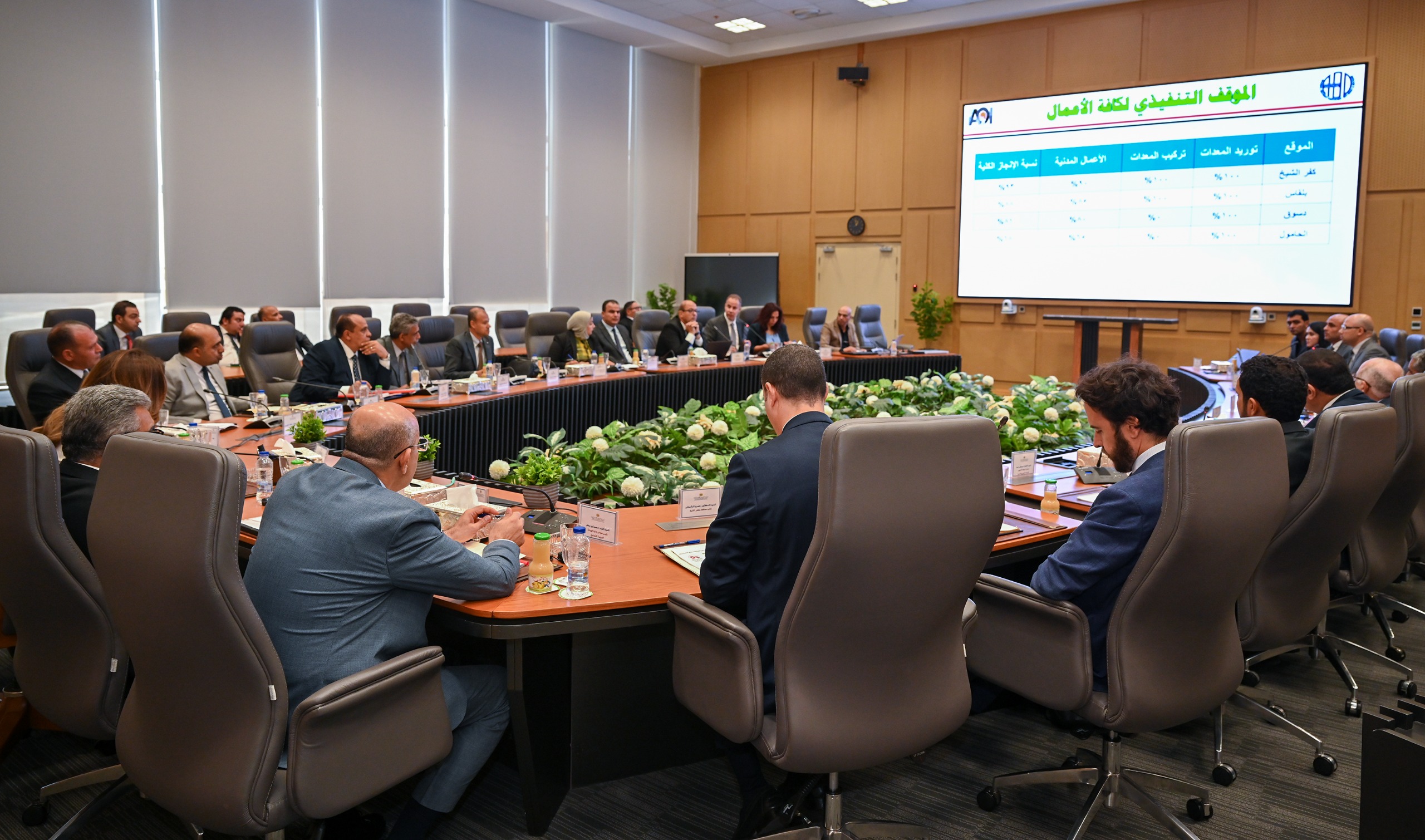
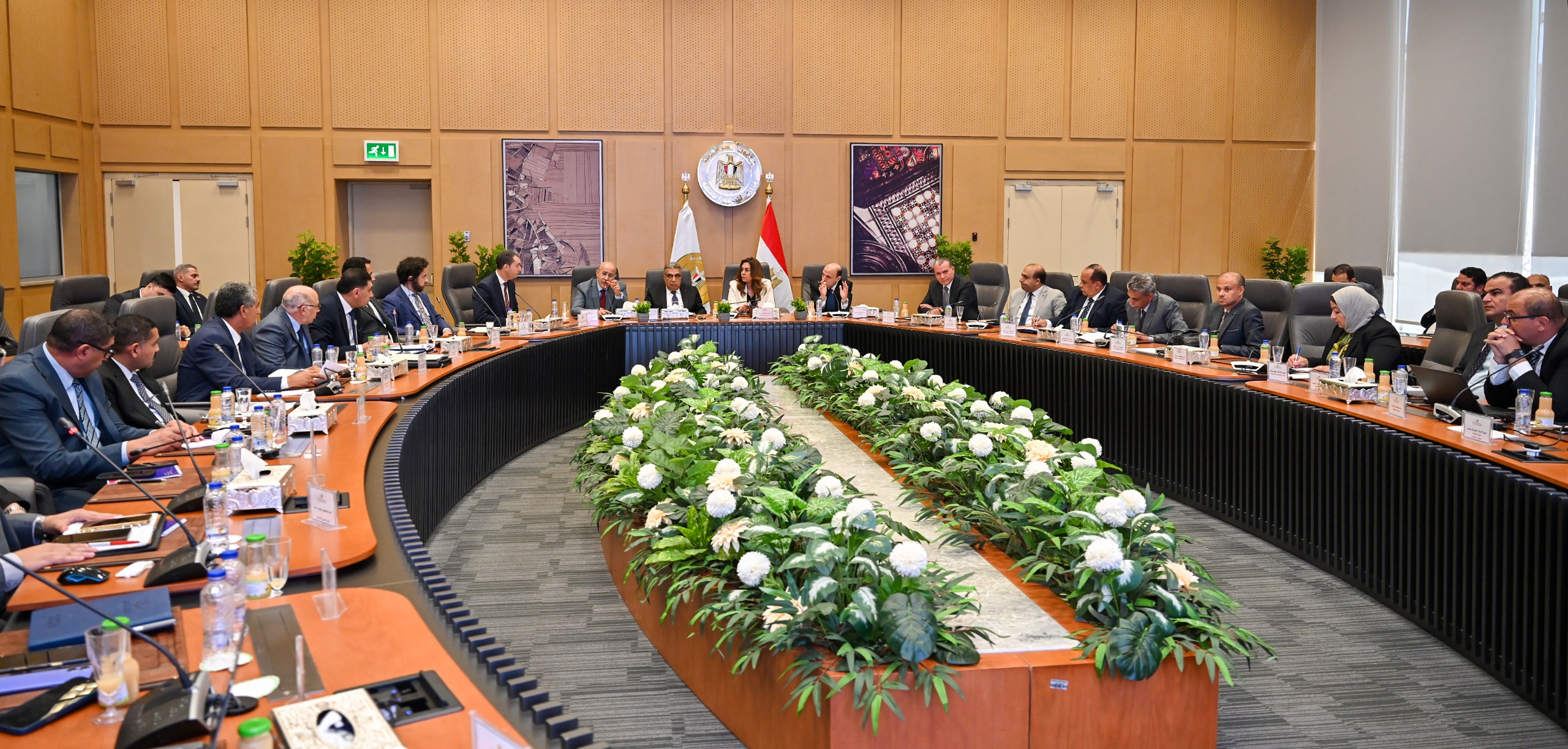
Major General Eng. Mohamed Abdel Fattah Abu Bakr, Chairman of the Arab Organization for Industrialization, met today with Dr. Manal Awad, Minister of Local Development and Environment, in the presence of Major General Tarek Marzouk, Governor of Dakahlia, and Major General Dr. Alaa Abdel Moaty, Governor of Gharbia. They discussed the progress of the Kitchener Drain water quality improvement project – specifically the solid waste component – which is being implemented by the Ministry in the governorates of Gharbia, Dakahlia, and Kafr El Sheikh. The project is funded by a €79 million grant from the European Bank for Reconstruction and Development and an €8 million grant from the European Union.
The meeting reviewed the comprehensive implementation status of all targeted projects within the waste component of the project to develop an integrated solid waste management system in the relevant governorates. The project aims to establish five solid waste recycling plants in (Dafra in Gharbia, Belqas in Dakahlia, Hamoul, Kafr El-Sheikh, and Desouk in Kafr El-Sheikh Governorate), and the latest developments in these projects were reviewed. The meeting also reviewed the implementation of two intermediate transfer stations, the rehabilitation and closure of the public landfill in Qallabsho in Dakahlia Governorate, the development of eight garages and mechanical equipment in the three governorates, and the support provided to the waste collection and transportation system with various equipment, including loaders and waste collection and transport vehicles of different capacities.
In this regard, Major General Engineer Mohamed Abdel Fattah Abu Bakr, Chairman of the Arab Organization for Industrialization, expressed his appreciation and pride in the serious and constructive cooperation with the Ministry of Local Development and Environment in joint projects. He noted that they are partners in success in many diverse manufacturing fields, in accordance with the state's plan to deepen local manufacturing, localize technology, and achieve Egypt's Vision for Sustainable Development 2030.
He emphasized the importance of implementing President Abdel Fattah El-Sisi's directives to expedite the targeted projects within the Kitchener Drain Water Quality Improvement Project, according to the established timeline. These projects contribute to creating an integrated waste management system, encompassing collection, treatment, recycling, and safe disposal of waste in the three governorates where the project is being implemented: Dakahlia, Gharbia, and Kafr El-Sheikh. He noted that the plan ensures sustainability and continuity.
He explained that the projects are being implemented through the construction of factories and transfer stations, the rehabilitation and closure of informal dumpsites, and the restoration of garages and solid waste collection and transportation facilities. This aims to achieve the overall objective of the project, which is to improve public health and the environment, thereby contributing to the economic and social stability of the residents of the targeted governorates.
He also indicated that the Arab British Dynamic Industries Company (ABD), a subsidiary of the Arab Organization for Industrialization, won the international tender issued by the European Bank for Reconstruction and Development (EBRD) to establish four factories for the treatment and recycling of municipal solid waste in the Dakahlia and Kafr El-Sheikh governorates, at a cost of €38.8 million.
He stated that this contract falls under the Kitchener Drain Water Quality Improvement Project, implemented by the Ministry of Local Development. He noted that this is the second largest solid waste recycling program globally, funded by the European Bank.
The Chairman of the Arab Organization for Industrialization explained that the recycling plants include three in Kafr El-Sheikh Governorate (in the cities of Desouk, Hamoul, and Kafr El-Sheikh) and one in Dakahlia Governorate (in Belqas), each with a daily production capacity of 600 tons of solid waste. He emphasized the commitment to the rapid implementation of the projects in accordance with international quality standards.
He added that the design of the four plants' systems adheres to all standard and environmental specifications, while also considering aesthetic considerations. He affirmed the commitment to increasing local manufacturing of various equipment components by leveraging advanced global expertise in this field.
It is worth noting that the sorting and recycling lines for the four factories have been manufactured and supplied. The installation of equipment at the Belqas and Kafr El-Sheikh factories has been completed, paving the way for trial operations once electricity is connected to both sites. Installation of equipment at the Hamoul and Desouk factories will begin in the coming days.
Major General Engineer Mohamed Abdel Fattah Abu Bakr also indicated that the Arab Organization for Industrialization is currently preparing to launch the largest waste recycling plant in Egypt, with a capacity of 1,600 tons per day. Located in the village of Dafra in Gharbia Governorate, the plant will occupy 12 acres and utilize European technology. This project, valued at €13 million, will contribute to a radical solution to the solid municipal waste problem in Gharbia Governorate and is scheduled for completion by the end of next year.
For her part, Dr. Manal Awad, Minister of Local Development and Environment, stressed the importance of accelerating the pace of work and completion rates, and ensuring that the companies implementing the projects adhere to the targeted timelines and approved schedules, with the aim of completing the projects by the end of January 2027.
The Minister also directed the project unit and the Ministry's Waste Management Regulatory Authority to conduct regular field monitoring, in coordination with the executive bodies in the three governorates and the Arab Organization for Industrialization, of all developments related to project implementation. She emphasized the need to expedite efforts to overcome any challenges or obstacles to support the state's efforts, achieve the project's environmental and economic objectives, and improve the cleanliness services provided to citizens. Dr. Awad further directed that a monthly meeting be held at the Ministry headquarters to monitor the project's progress and expedite the completion of remaining work. Representatives from the Bank for Reconstruction and Development, the Arab Organization for Industrialization, and the governorates should attend these meetings, with roles and responsibilities clearly defined.
Dr. Awad also emphasized the importance of all implementing entities and governorates fulfilling their agreed-upon roles as outlined during the meeting.
At the conclusion of the meeting, it was agreed to continue coordination and consultation between the various parties.